
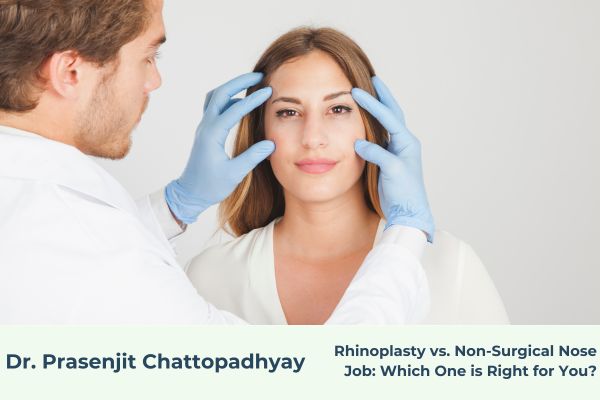
Rhinoplasty vs. Non-Surgical Nose Job: Which One is Right for You?
Your nose plays a crucial role in facial harmony, and many people consider nose reshaping to enhance their appearance or improve breathing. When it comes to nasal enhancements, two primary options exist: surgical rhinoplasty and the non-surgical nose job. Understanding the differences between these procedures can help you make an informed decision based on your needs and expectations.
What is Rhinoplasty?
Rhinoplasty, commonly known as a nose job, is a surgical procedure designed to reshape the nose for cosmetic or functional reasons. It can correct structural deformities, improve breathing, and enhance overall facial aesthetics.
Types of Rhinoplasty:
- Open Rhinoplasty: Involves an incision across the columella (the strip of tissue between the nostrils), allowing greater access to reshape the nose.
- Closed Rhinoplasty: Incisions are made inside the nostrils, leading to no visible scars and a shorter recovery time.
- Functional Rhinoplasty: Focuses on improving breathing difficulties caused by a deviated septum or other structural issues.
Pros of Rhinoplasty:
Permanent results
Ability to reshape bone and cartilage for major structural changes
Can correct breathing issues
Enhances overall facial harmony
Cons of Rhinoplasty:
Longer recovery time (1-2 weeks for initial healing, several months for full results)
Surgical risks, including swelling, bruising, and infection
More expensive than non-surgical alternatives
What is a Non-Surgical Nose Job?
A non-surgical nose job (liquid rhinoplasty) involves the use of dermal fillers to reshape the nose without surgery. It’s an excellent option for those seeking minor enhancements without the downtime of surgery.
Procedure Overview:
A cosmetic specialist injects hyaluronic acid (HA) fillers into specific areas of the nose to improve symmetry, smooth out bumps, or create a more refined appearance. The procedure takes 15-30 minutes and requires no anesthesia.
Pros of Non-Surgical Nose Job:
Quick, in-office procedure with minimal downtime
Reversible and adjustable
No surgery, scars, or long recovery periods
Ideal for subtle changes and minor imperfections
Cons of Non-Surgical Nose Job:
Results are temporary (lasts 6-18 months)
Cannot reduce nose size or correct functional issues
Potential side effects like swelling or bruising
Which Option is Right for You?
Choose Rhinoplasty if:
You want permanent results
You need structural changes or functional corrections
You are prepared for surgery and a longer recovery period
Choose Non-Surgical Nose Job if:
You want a quick, temporary enhancement
You have minor concerns like bumps or asymmetry
You prefer a non-invasive, low-risk procedure
Conclusion
Both rhinoplasty and non-surgical nose jobs offer unique benefits, depending on your goals. If you’re looking for dramatic, long-term changes, rhinoplasty is the way to go. If you prefer a non-invasive, temporary fix, a non-surgical nose job might be your best bet. Consulting with an experienced plastic surgeon can help you determine the most suitable option for your aesthetic and medical needs.